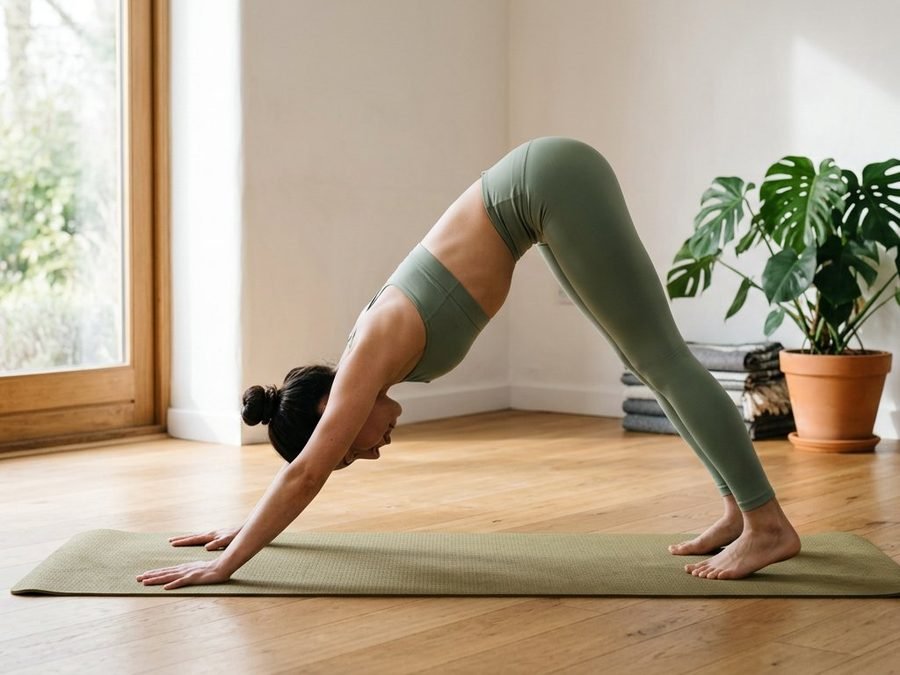
Mobility & Recovery All levels Mobility

The 5-Minute Desk Break That Undoes Sitting

There is no single correct sitting posture. The research is fairly clear on this: the problem is not the shape you hold, it is holding one shape for eight hours. That is good news, because it means the fix is not a better chair — it is getting up more often, and using the time to move the joints that have been still.

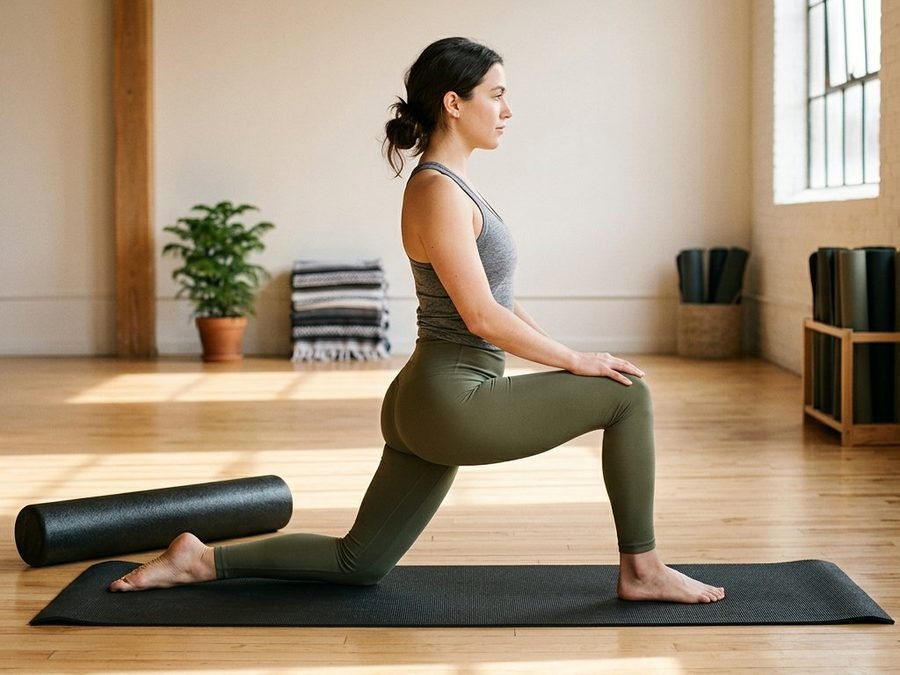
Every 45–60 minutesVolume
NoneRest
All levelsLevel
Gentle and slowTempo
Jump to instructions
Desk Breaks: 5 Minutes Every Hour

Why this works

Frequent brief movement breaks restore circulation and joint range far more effectively than one long stretch session, and they accumulate without needing a change of clothes.

Primary muscles

  • Hips
  • Spine
  • Neck

Also working

  • Shoulders
  • Ankles
  • Eyes
Goal
Mobility
Level
All levels
Sets & reps
Every 45–60 minutes
Rest
None
Tempo
Gentle and slow
Est. burn
10–20 per break

Equipment

  • None
  • A chair
  • A wall

Set-up

  1. Set a recurring reminder every 45–60 minutes. Relying on remembering is the reason most people never do this. A phone alarm is enough.
  2. No mat, no equipment — everything here uses a chair or a wall. The point is that you can do it in an office, in work clothes, without getting sweaty.
  3. Keep it to five minutes. A break you take four times a day beats a routine you take once and abandon.

How to do it, step by step

  1. Stand and reach overhead (30 sec)

    Interlace your fingers, turn your palms up and reach tall, then lean gently side to side. This decompresses the spine and opens the shoulders after hunching.

  2. Standing hip hinge with a chair (45 sec)

    Feet hip-width, hands on your thighs, hinge at the hips until your chest is at about 45 degrees while keeping a long back. Hinge up and down ten times. This is a spine-friendly way to wake up the hamstrings and glutes.

  3. Chair thoracic twist (45 sec per side)

    Sit tall, cross your arms over your chest, and turn to one side, holding the chair back to deepen it gently. Five breaths each way. This is the single best move for a stiff mid-back.

  4. Wall slides (45 sec)

    Stand with your back to a wall, arms at 90 degrees, and slide them up and down while keeping contact. Ten slow reps. Expect it to be harder than it looks.

  5. Split-stance hip flexor stretch (45 sec per side)

    Stand in a split stance and tuck your rear hip under until you feel a stretch at the front of the hip. No need to kneel — this version works in office clothes.

  6. Calf raises and neck reset (45 sec)

    Twenty slow calf raises holding the desk for balance, then slow neck turns and ear-to-shoulder tilts. Finish by looking 6 metres away for 20 seconds to relax your eyes.

Common mistakes (and how to fix them)

Doing one long break instead of several short ones

The benefits are dose-dependent on frequency. Four short breaks beat one long one.

Turning it into a workout

You are not trying to get sweaty at your desk. Gentle range of motion is the goal.

Hunching harder during the twists

Sit tall first, then rotate. Rotation on a collapsed spine is where people tweak things.

Coaching cues & progressions

  • Pair each break with something you already do — after every meeting, or every time you refill your water bottle.
  • Walk for at least 90 seconds of the break. Walking is the single best movement for undoing a sitting day.
  • Use a smaller water bottle. Refilling it more often is a surprisingly effective movement prompt.
  • If you get headaches at your desk, the neck and eye resets at the end of this sequence are the ones to prioritise.

Safety notes

Stop any movement that reproduces sharp pain or causes numbness. Keep the range comfortable — this is maintenance, not a stretch-off. Do not do one long break and call it done. Frequency is the entire mechanism. If you have an existing injury, are pregnant, or are returning to exercise after a long break, get clearance from a doctor or physiotherapist before starting.

Suitable for

Frequently asked questions

Is sitting really bad for you?

Not inherently. Prolonged, uninterrupted sitting is associated with worse health outcomes, but the effect is largely offset by regular movement. The target is fewer long stretches, not a perfect chair.

Do standing desks help?

They help you change position more often, which is the actual benefit. Standing still all day is no better than sitting still all day. Alternate between the two.

How many breaks do I need?

A five-minute movement break every 45–60 minutes, or at minimum two minutes of walking every half hour. Even that is far better than nothing.

Can I do this without leaving my desk?

Most of it, yes — the twist, wall slides and neck work all work at or beside a desk. The calf raises and split stance are best done standing.

Will this fix my back pain?

It often helps meaningfully, because it breaks up the sustained positions that aggravate it. If pain is persistent, radiating, or worse at night, get it assessed rather than self-treating.

Marcus Feld

Writes and coaches for MoveWell. Every guide is reviewed by Dr. Erik Lund, PT before publication, and updated when the evidence changes. Read more about our team and review process →

Related guides

All exercises

One workout, every Sunday

A single programmed session for the week ahead, one technique explainer, and the reader question worth answering. Written by our coaches — no supplement ads, no 5am rhetoric.

Thanks — check your inbox to confirm. You can unsubscribe in one click.

By subscribing you agree to our privacy policy. 31,000 readers, no spam.