Home Workouts All levels Strength

20-Minute Full-Body Home Workout (No Equipment)

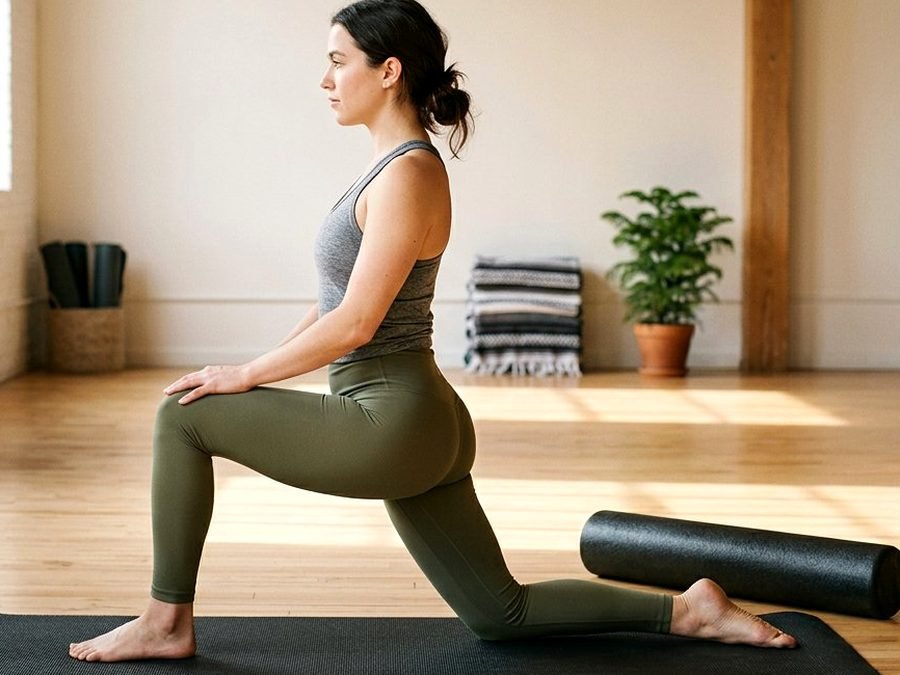
You do not need a gym to build strength. You need four movements that cover the main patterns — a squat, a push, a hinge and a core — and a way to make them harder without adding weight. This circuit uses time under tension and single-leg variations to do that, and it takes twenty minutes, which is short enough to actually do on a Wednesday.
5 rounds of 4 exercisesVolume
60 seconds between roundsRest
All levelsLevel
Smooth and controlledTempo
Jump to instructions
The 20-Minute No-Equipment Home Circuit

Why this works

Forty seconds of controlled work per movement, repeated across five rounds, gives about 13 minutes of real training stimulus — enough to build strength when paired with harder variations over time.

Primary muscles

  • Glutes
  • Legs
  • Chest
  • Core

Also working

  • Shoulders
  • Hamstrings
  • Conditioning
Goal
Strength
Level
All levels
Sets & reps
5 rounds of 4 exercises, 40 sec work / 20 sec rest
Rest
60 seconds between rounds
Tempo
Smooth and controlled, never rushed
Est. burn
180–260 total

Equipment

  • Mat
  • Chair or sofa edge (optional)

Set-up

  1. Clear a 2 × 1 metre space and put a mat down. You will be on the floor for two of the four movements.
  2. Set a timer for 40 seconds work / 20 seconds rest, five rounds. Any interval timer app will do, or count seconds in your head — the point is not to stop early.
  3. Pick your level for each movement before you start. Do not improvise during the round. Decide your variations in advance so you are not thinking about them at rep eight.

How to do it, step by step

  1. Squat — 40 seconds

    Bodyweight squat, or split squat for a harder version. Beginner: squat to a chair and stand back up. Advanced: jump squats or a 3-second pause at the bottom of every rep.

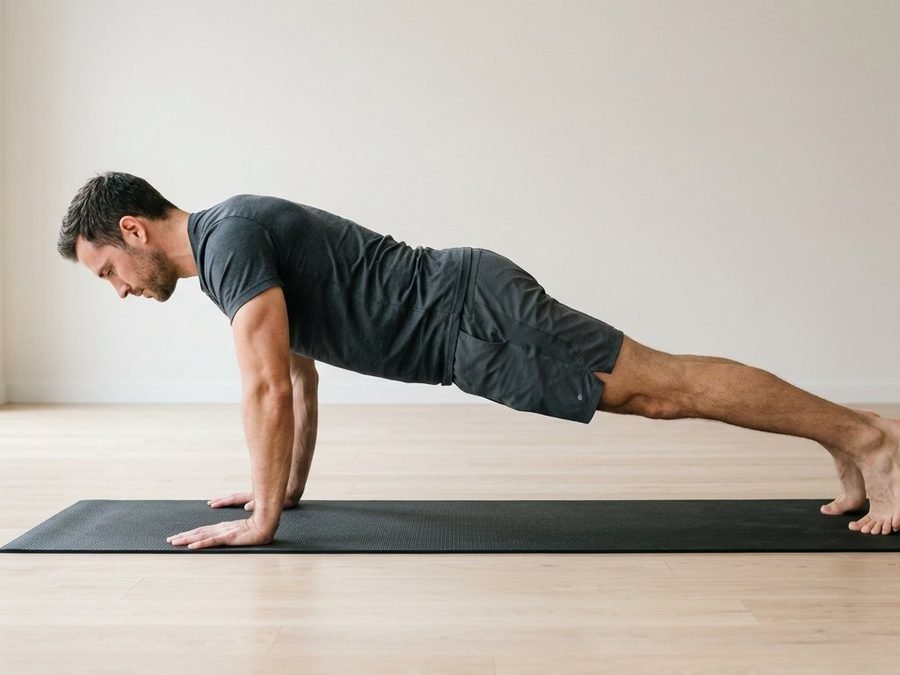
  2. Push-up — 40 seconds

    Hands on the floor, on a chair seat, or on a wall — whichever level gives you clean reps for the full 40 seconds. Advanced: feet elevated, or a 2-second lower every rep.

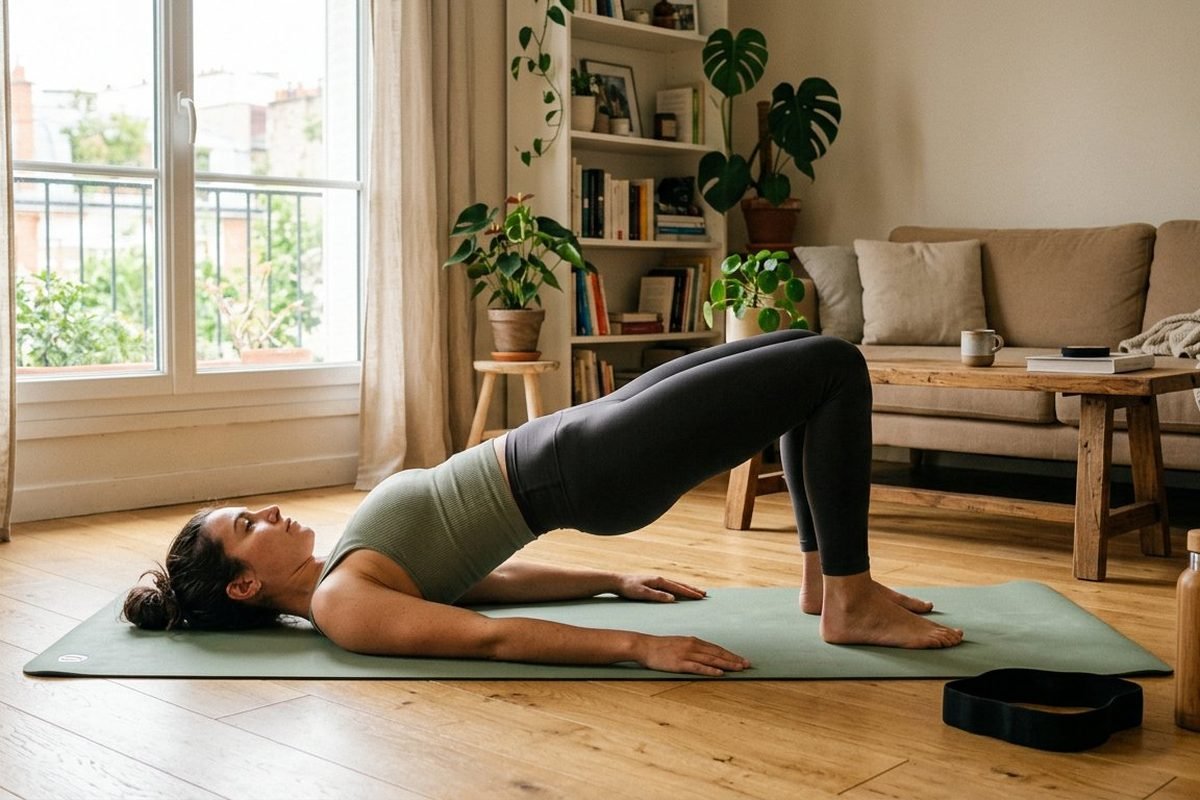
  3. Glute bridge or single-leg bridge — 40 seconds

    Lie on your back, feet flat, drive through your heels and squeeze your glutes at the top. Advanced: lift one foot off the floor and bridge on one leg, alternating sides.

  4. Dead bug — 40 seconds

    On your back, arms up, knees over hips. Lower the opposite arm and leg slowly, keeping your lower back pressed to the mat. Advanced: extend further and slower.

  5. Rest 60 seconds, then repeat for five rounds

    Total work: 20 minutes. If you cannot finish five rounds at good quality, do three and build up — a short session done well beats a long one done badly.

Common mistakes (and how to fix them)

Rushing to fit in more reps

Speed is not intensity. A controlled rep at 3 seconds down and 1 up is harder — and safer — than four fast ones.

Losing the core position in the dead bug

If your lower back lifts off the mat, reduce how far you extend your arm and leg. Range is earned.

Holding your breath on the last reps

Breathe out on effort. It lowers blood pressure spikes and keeps your bracing honest.

Coaching cues & progressions

  • Three sessions a week is the sweet spot. Two is still worth it; five is unnecessary for a circuit like this.
  • Progress by making the movement harder, not by adding more rounds — 8 rounds of the same thing just adds fatigue.
  • No equipment needed, but a resistance band looped above the knees makes the glute bridge considerably harder.
  • If you are short on time, do rounds 1–3 and skip the rest. Ten minutes beats zero.

Safety notes

Stop if you feel chest pain, dizziness or joint pain. Muscle burn is expected; sharp pain is not. Keep water nearby. Do not trade form for reps, and do not skip the warm-up. If you have an existing injury, are pregnant, or are returning to exercise after a long break, get clearance from a doctor or physiotherapist before starting.

Suitable for

Frequently asked questions

Can I build muscle with bodyweight only?

Yes, up to a point. Beginners build meaningful muscle from bodyweight work for the first several months. Once you can do 20 controlled push-ups and 30 squats, you will need harder variations (single-leg, elevated, tempo) or added load to keep progressing.

Is this good for weight loss?

It contributes, but diet drives weight loss. What this session does reliably is build and preserve muscle, improve insulin sensitivity and raise your daily energy expenditure — all of which help.

Can I do this every day?

Not at full effort. Alternate with walking or mobility work. Muscles need roughly 48 hours to recover from a hard session.

What if I live in an apartment with neighbours below?

Swap jump squats for paused squats, and step rather than jump. Every movement here can be done silently.

How do I know it is working?

You will notice the same circuit feeling easier in three to four weeks. Then it is time to progress the variations, not to add rounds.

Marcus Feld

Writes and coaches for MoveWell. Every guide is reviewed by Dr. Erik Lund, PT before publication, and updated when the evidence changes. Read more about our team and review process →

Related guides

All exercises

One workout, every Sunday

A single programmed session for the week ahead, one technique explainer, and the reader question worth answering. Written by our coaches — no supplement ads, no 5am rhetoric.

Thanks — check your inbox to confirm. You can unsubscribe in one click.

By subscribing you agree to our privacy policy. 31,000 readers, no spam.